Sargam on Guitar
If you’ve ever wondered how Indian classical music and the guitar come together, you’re not alone. Many guitarists—especially in India—experiment with Sargam (the Indian solfege system: Sa, Re, Ga, Ma, Pa, Dha, Ni) on the fretboard to explore a whole new dimension of melody.
In this blog, we’ll take a closer look at what Sargam is, how it translates to the guitar, and how you can start practicing it yourself.
What is Sargam?
Sargam is the Indian equivalent of the Western solfege (Do, Re, Mi, Fa, So, La, Ti). The notes are:
- Sa (Shadja)
- Re (Rishabh)
- Ga (Gandhar)
- Ma (Madhyam)
- Pa (Pancham)
- Dha (Dhaivat)
- Ni (Nishad)
Unlike Western music, which is often tuned to equal temperament, Indian classical music is highly nuanced, with microtones (shruti) and variations (komal – flat, teevra – sharp).
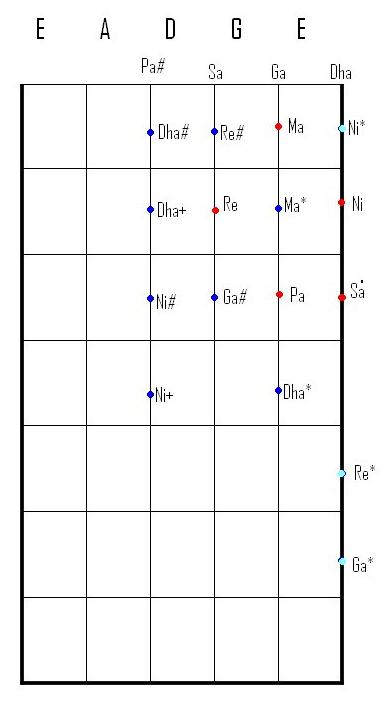
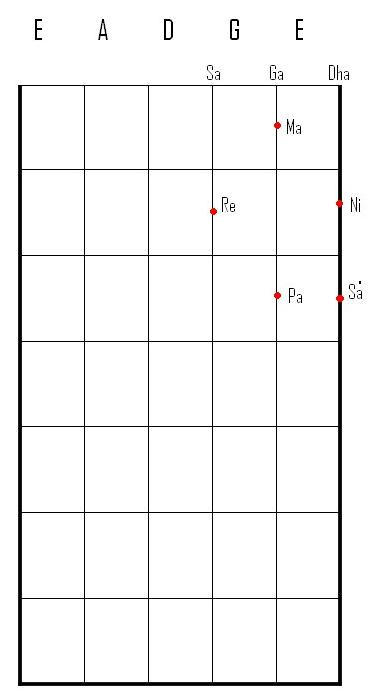
Mapping Sargam to Guitar


Why Practice Sargam on Guitar?
- Ear Training – Indian ragas are built on Sargam patterns. Playing them helps you sharpen your ears for microtones and melodic phrasing.
- Improvisation – Learning Sargam opens up a new way of improvising beyond Western scales.
- Fusion Music – If you’re into blending Indian and Western sounds, this is your key to innovation.
- Discipline & Flow – Practicing Sargam builds finger control and melodic fluency.
Exercises to Try
- Straight Sargam
Play: Sa Re Ga Ma Pa Dha Ni Sa ascending, then descend: Sa Ni Dha Pa Ma Ga Re Sa. - Skipping Patterns
Try Sa Ga Re Ma, Ga Pa Ma Dha, etc. to develop flexibility. - Raga-Based Practice
Start with simple ragas like Raga Yaman or Raga Bhupali, which are easier to map on guitar.
Tips for Practicing
- Always use a metronome or tanpura drone app to keep your sense of rhythm and pitch.
- Sing the notes while playing them—this builds a strong connection between ear and hand.
- Start slow and focus on clean intonation, especially when bending strings for microtonal effects.
Conclusion
Sargam on guitar is more than just learning notes—it’s about blending two rich musical traditions. By practicing Indian classical note patterns on the guitar, you expand your musical vocabulary, sharpen your ears, and discover new creative pathways.
So pick up your guitar, tune your Sa, and let the strings sing in Sargam!

Hi.. i am interested to get Guitar Chords and Leads of favourite Hindi Songs on the scale displayed here. Do you provide the same by paying fees?
nice!
Plz do explain the means of Blue an Red marks
Plz explain what is d meaning of * + & # …..
thankyou….very useful
tnx tab & chord
Would u plz explain the mening of + * nd # in ur 2nd pic.
for first patern and # for second patern
Cool